Book Now

Blog

Insights, advice and the latest in medical aesthetics from Dr Maria Shakoor.

DermaFocus product range — Purasomes, Plinest polynucleotides and Celora Vita used in clinical aesthetic practice

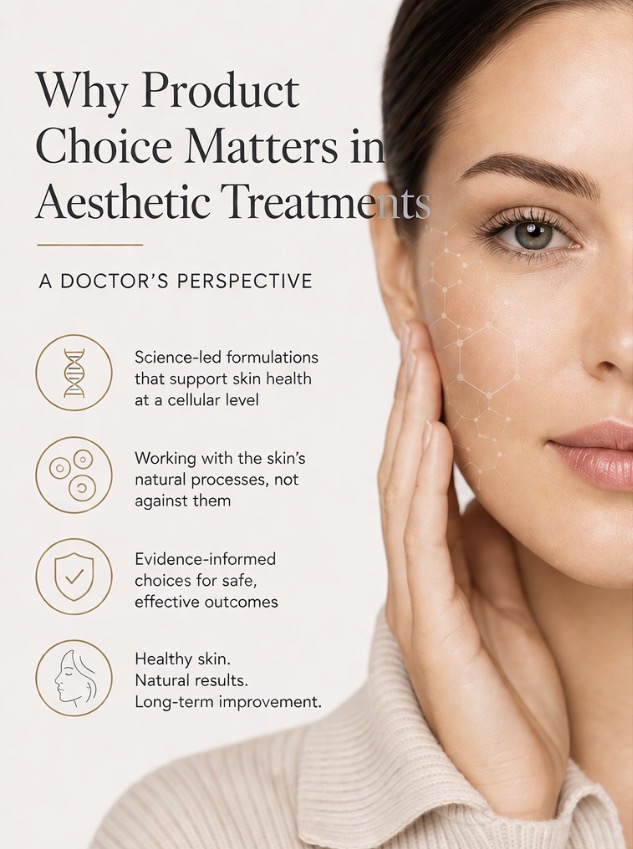
Why Product Choice Matters in Aesthetic Treatments: A Doctor's Perspective

When patients explore aesthetic treatments, the focus is often on the procedure itself — microneedling, skin boosters, or injectable therapies.

In clinical practice, however, outcomes are rarely determined by the procedure alone.

They are influenced by three key factors:

  • The quality and composition of the product used
  • The technique and delivery method
  • The clinical judgement behind the treatment plan

As both a GP and aesthetic practitioner, my approach is grounded in the same principles that guide medical practice: safety, evidence-informed decision-making, and long-term tissue health.

For this reason, I use a structured, system-based approach in clinic, working with the DermaFocus range, which includes Purasomes, Plinest polynucleotides, and Celora Vita. My choice is based on careful consideration of product composition, scientific rationale, and consistency in clinical use, rather than trends or branding alone.

Supporting Skin Function, Not Overstimulating It

The skin has an inherent ability to repair and regenerate. Many aesthetic treatments work by initiating this response through controlled stimulation.

However, stimulation alone does not ensure optimal outcomes.

For effective repair, the skin requires:

  • A well-regulated inflammatory response
  • Effective cell-to-cell communication
  • A supportive biochemical environment

In ageing, sensitive, or previously compromised skin, these processes are often less efficient. Without appropriate support, healing can be inconsistent.

This is where considered product selection becomes clinically important.

Purasomes: Supporting the Skin's Healing Environment

Microneedling creates controlled micro-injury within the skin, triggering a repair response and temporarily increasing permeability.

During this phase, what is applied to the skin can influence how that repair process unfolds.

Purasomes are used within this context to help support the healing environment. They contain extracellular vesicles — naturally occurring particles involved in cellular communication.

These vesicles carry a range of biological components, including:

  • Proteins involved in signalling pathways
  • Lipids that contribute to cellular structure
  • Small regulatory molecules that influence how cells respond and repair

In regulated formulations, these components are produced under controlled laboratory conditions and undergo purification processes to support consistency and safety.

Their role is not to force regeneration, but to help coordinate the skin's natural repair processes, particularly by:

  • Supporting balanced inflammatory responses
  • Facilitating communication between skin cells
  • Assisting the transition from inflammation to tissue repair

Clinically, this approach is particularly relevant in patients where healing may be slower, or where inflammation needs to be carefully managed.

Polynucleotides (Plinest): Improving the Skin's Internal Environment

Polynucleotides represent a different aspect of regenerative treatment.

Plinest consists of highly purified DNA-derived fragments that interact with the skin at a deeper level, contributing to the environment in which cells function.

Rather than producing an immediate visible change, they support processes associated with tissue repair and resilience.

Their effects are understood to include:

  • Supporting fibroblast activity, contributing to collagen and elastin production
  • Enhancing hydration through water-binding properties
  • Helping regulate inflammatory responses
  • Supporting protection against oxidative stress

This makes them particularly useful in clinical scenarios such as:

  • Thin or fragile skin
  • The under-eye area
  • Skin that is reactive, inflamed, or slower to recover

Results tend to develop gradually, reflecting improvements in skin quality and function, rather than temporary cosmetic change.

Celora Vita: Replenishing the Building Blocks of Skin Repair

Ageing skin is characterised not only by structural changes, but also by a gradual depletion of the components required for repair.

This includes amino acids, which are essential for protein synthesis, and molecules responsible for maintaining hydration and tissue integrity.

Celora Vita is designed to help address this by providing:

  • Amino acids that support collagen and elastin formation
  • Hyaluronic acid to maintain hydration and dermal structure

This approach focuses on replenishing what the skin requires, rather than relying solely on stimulation.

In clinical practice, this can help:

  • Support ongoing repair processes
  • Improve hydration within the skin
  • Enhance overall skin quality and resilience over time

A Structured, Individualised Approach

In medicine, outcomes are rarely achieved through a single intervention.

Similarly, in aesthetic practice, optimal results often come from combining different mechanisms in a controlled and thoughtful way.

Using a structured system allows for the integration of:

  • Mechanical stimulation (e.g. microneedling)
  • Cellular support (e.g. polynucleotides)
  • Biological signalling support (e.g. extracellular vesicles)
  • Nutritional and structural components (e.g. amino acids and hyaluronic acid)

Every treatment plan is tailored, taking into account:

  • Skin type and condition
  • Medical history
  • Sensitivity and inflammatory tendencies
  • Long-term goals

Final Thoughts

Aesthetic medicine is increasingly moving towards a regenerative and evidence-informed model, focused on improving how the skin functions over time.

My choice of products is based on reviewing available scientific literature, understanding formulation composition, and applying clinical experience.

The aim is not rapid or exaggerated change, but:

  • Healthier skin
  • Natural, balanced results
  • Sustainable, long-term improvement

Individual results vary. A consultation is required to assess suitability for treatment.

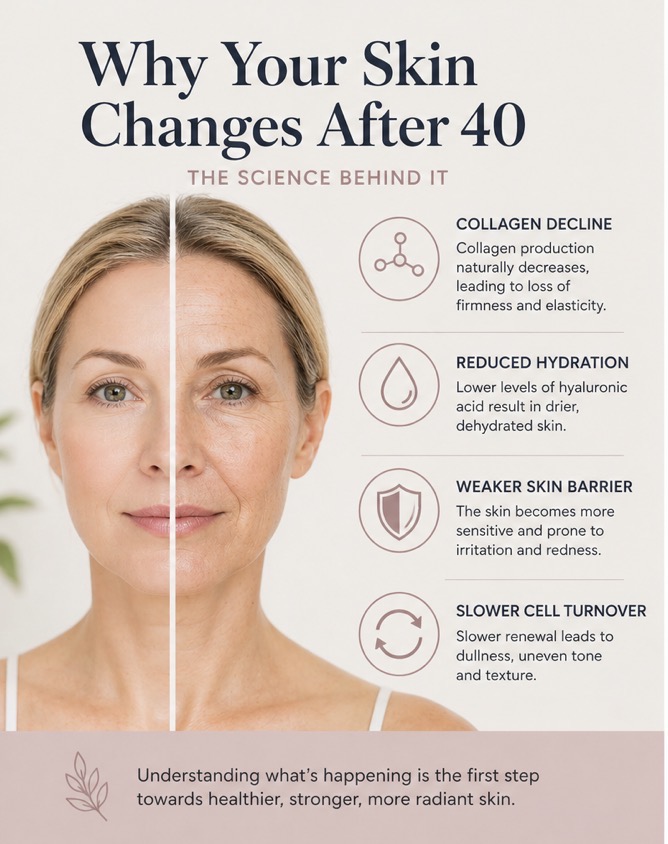
Why your skin changes after 40 — collagen decline, reduced hydration, weaker skin barrier and slower cell turnover
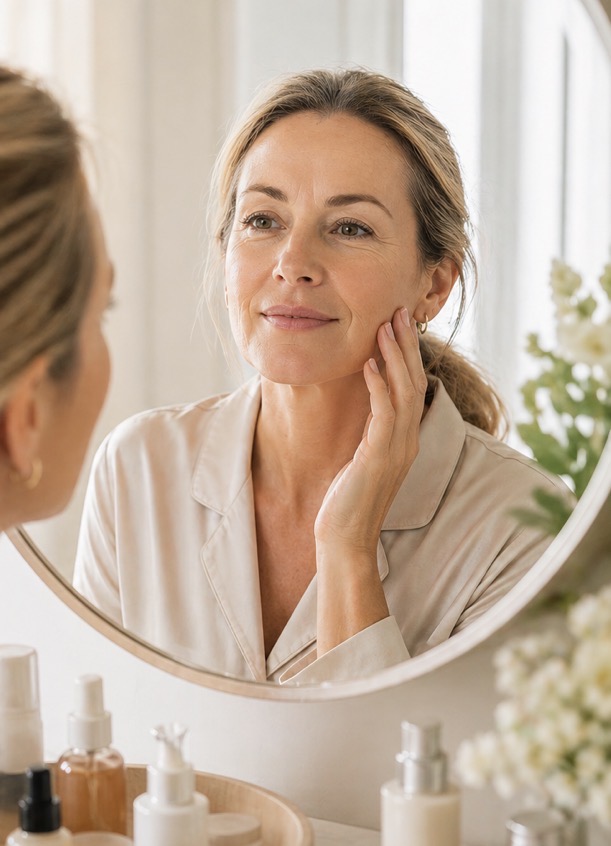
Woman in her 40s reviewing her skincare routine in the mirror

Why Your Skin Suddenly Changed After 40 — And What Actually Works

Understanding perimenopausal skin changes and the approach that genuinely supports healthier skin.

If your skin has started to feel different in your late 30s or 40s — drier, more sensitive, or lacking its usual glow — you're not imagining it.

One of the most common things we hear in clinic is: "My skin has suddenly changed, and nothing I use seems to work anymore."

For many women, this shift isn't just down to ageing alone. It is often linked to perimenopause, a stage where hormonal changes begin to affect the skin in noticeable and sometimes unexpected ways.

What Happens to Your Skin After 40?

From your late 30s onwards, your skin begins to change at a structural level. During perimenopause, these changes can become more pronounced.

  • Collagen production gradually declines. Collagen keeps skin firm and smooth, and levels reduce over time, particularly as oestrogen decreases.
  • Hydration levels reduce. Oestrogen helps maintain hyaluronic acid within the skin, and lower levels can lead to dryness and a loss of plumpness.
  • The skin barrier can become weaker. This may result in increased sensitivity, irritation, and reduced tolerance to products that were previously well tolerated.
  • Cell turnover slows down. This can contribute to dullness, uneven skin tone, and a less radiant appearance.

Common Skin Changes During Perimenopause

  • Persistent dryness or dehydration
  • Fine lines becoming more noticeable
  • Loss of firmness or elasticity
  • Increased sensitivity or redness
  • Breakouts, particularly around the jawline
  • Uneven skin tone or pigmentation

These changes can feel sudden, which is why they often come as a surprise.

Why Your Old Skincare Routine Stops Working

What worked in your 20s and 30s may no longer be effective. Your skin now requires more support for hydration, barrier repair and collagen stimulation. Using too many active ingredients or frequently changing products can sometimes worsen sensitivity rather than improve the skin.

What Actually Works

A more effective approach focuses on improving overall skin health and supporting the skin's natural function.

Skin regeneration and hydration. Treatments that support skin quality can make a noticeable difference, including:

  • Skin boosters such as Profhilo or Sunekos, which improve hydration and elasticity
  • Polynucleotides, which support skin repair and resilience
  • PRP (platelet-rich plasma), which uses your own platelets and is intended to support natural skin repair processes

Collagen stimulation. To improve firmness and texture, options include medical microneedling such as SkinPen, and laser treatments to support collagen and overall skin quality.

Medical-grade skincare. A simple, consistent routine is often the most effective:

  • Gentle cleanser
  • Hydrating moisturiser to support the skin barrier
  • Antioxidant such as vitamin C (if tolerated)
  • Retinoid introduced gradually
  • Daily SPF

The Role of Hormones

For some women, skin changes are closely linked to hormonal shifts. Addressing underlying factors, where appropriate, with guidance from a qualified healthcare professional may support both skin health and overall wellbeing.

What to Avoid

  • Over-exfoliating or using multiple active ingredients
  • Frequently changing skincare products
  • Following trends without understanding your skin

Healthy skin after 40 is best supported through a consistent and personalised approach.

A More Balanced Perspective

Your skin is not "failing" — it is changing. Understanding these changes makes it easier to choose appropriate treatments and avoid unnecessary or ineffective products.

When to Seek Advice

If your skin feels persistently dry, sensitive, or has noticeably changed in texture or appearance, it may be helpful to seek professional advice. At DermMED Aesthetics, we provide personalised skin consultations for women experiencing perimenopause and menopause-related skin changes in Ingleby Barwick and surrounding areas.

FAQs

Why does skin become dry after 40? Hormonal changes, particularly reduced oestrogen, can affect the skin's ability to retain moisture.

Can menopause cause acne? Hormonal fluctuations can contribute to breakouts, often around the lower face and jawline.

What is the best treatment for ageing skin after 40? A combination of appropriate skincare, collagen-stimulating treatments, and personalised advice is usually most effective.

Do skin boosters really work? They can improve hydration and overall skin quality over time when used as part of a structured treatment plan.

This article is intended for educational purposes only and does not constitute medical advice. Skin concerns and treatment suitability vary from person to person. A personalised consultation with a qualified medical professional is essential before starting any treatment. Individual results from aesthetic treatments may vary.

Regenerate, restore, revive - the future of natural rejuvenation
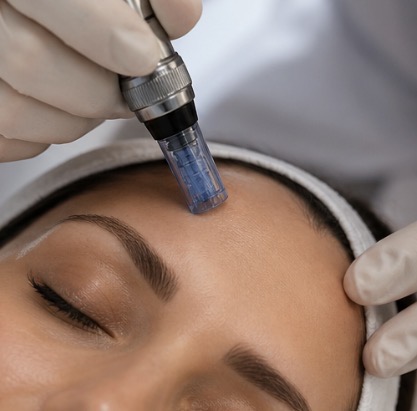
Microneedling skin rejuvenation treatment

The Rise of Regenerative Aesthetics

Why patients are choosing healthier skin over a "done" look.

Over the past few years, there's been a noticeable shift in what patients want from aesthetic treatments. It's no longer about looking "done" or dramatically different — most people simply want to look like a fresher, healthier version of themselves.

This is where regenerative aesthetics comes in.

Rather than adding volume or freezing movement, regenerative treatments aim to support your skin's natural ability to repair and renew itself. Treatments such as PRP (using your own platelets), polynucleotides, and advanced microneedling are intended to support collagen activity and skin quality over time, with results that vary between individuals.

The results aren't instant or dramatic — and that's exactly the point. Skin gradually becomes smoother, stronger, and more radiant, without obvious signs of having had "work done."

This approach is particularly appealing to those who:

  • Want subtle, natural-looking results
  • Prefer to improve skin quality rather than change facial shape
  • Are noticing early signs of ageing, dullness, or sensitivity

What's important to understand is that ageing is not just about wrinkles. It's about changes happening deeper within the skin — loss of collagen, hydration, and elasticity. Regenerative treatments aim to address these underlying changes, not just what we see on the surface.

Aesthetic medicine is evolving, and patients are becoming more informed. The focus is shifting towards long-term skin health, prevention, and natural results — and regenerative aesthetics sits right at the heart of that change.

If you're unsure whether this approach is right for you, a personalised consultation can help guide you based on your skin, your concerns, and your goals.

Have questions about your skin?

Book a personalised consultation with Dr Maria Shakoor.

Book Online